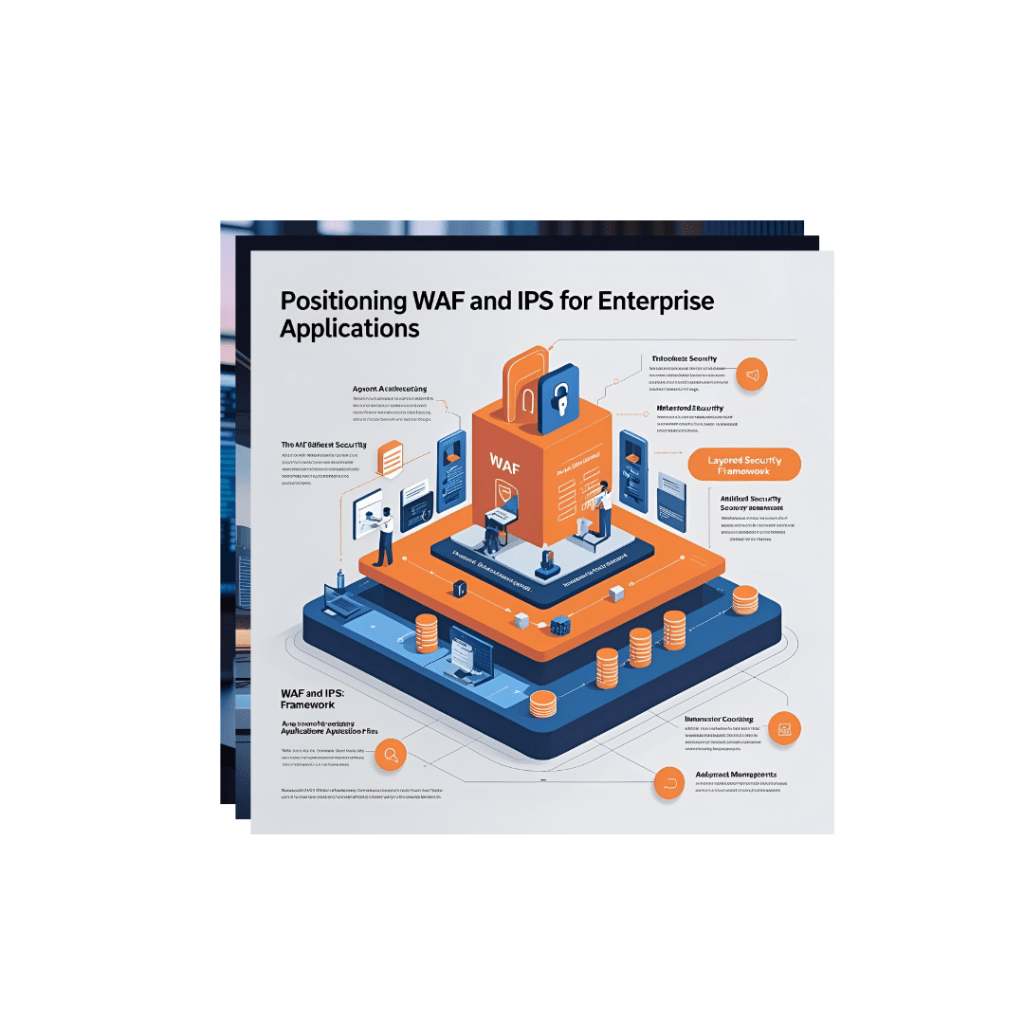
If you’ve ever debated whether your Intrusion Prevention System (IPS) or Web Application Firewall (WAF) should come first in your enterprise security stack, you’re in good company. This question isn’t just common—it’s fundamental to building a resilient, layered defense for public-facing applications. Let’s break down the roles of these controls, the technical logic behind their placement, and what’s at stake if you get it wrong.
Why Do We Even Need Both?
Think of your enterprise like a busy airport. You want security at every checkpoint, not just at the boarding gate. Both WAF and IPS block malicious traffic, but each is designed for a different type of threat and operates at a different “checkpoint” in the OSI model.
- WAF (Web Application Firewall):
Specializes in protecting your web applications by inspecting HTTP/HTTPS traffic at Layer 7 (the application layer). It’s your best defense against attacks like SQL injection, cross-site scripting (XSS), and other threats targeting the logic of your web apps. - IPS (Intrusion Prevention System):
Monitors and blocks threats at Layers 3 and 4 (network and transport layers), such as port scans, protocol exploits, and malware trying to slip in through non-web channels. IPS is broader, but less specialized for web application logic.
How Do They Actually Work?
- WAF:
Think of the WAF as a customs officer who not only checks your passport (Layer 3/4 info) but also asks detailed questions about your trip (Layer 7 content). While it must process network and transport headers to route traffic, its real job is to deeply inspect what’s inside each web request. - IPS:
The IPS is like airport security scanning all bags for known threats. It can sometimes peek inside web traffic, but unless it’s set up to decrypt SSL/TLS, it can’t see what’s inside encrypted HTTPS requests—a major limitation as most modern web traffic is encrypted.
The SSL Decryption Dilemma
SSL decryption means having the keys to unlock and inspect encrypted HTTPS traffic.
- IPS without SSL decryption: Blind to threats hidden in HTTPS traffic.
- WAF: Usually terminates SSL/TLS, decrypts traffic, and inspects it for web attacks.
But SSL decryption is resource-intensive and can introduce privacy and compliance concerns. For most organizations, it’s simply not practical to have IPS do this at scale.
Who Should Take the Lead—WAF or IPS?
When it comes to securing your enterprise environment, the order in which you deploy your Web Application Firewall (WAF) and Intrusion Prevention System (IPS) can make all the difference. Let’s break down the best practice:
WAF Leads the Charge
By positioning your WAF at the very front of your security stack, you give it the first opportunity to intercept and scrutinize all incoming web traffic—both HTTP and HTTPS. This allows the WAF to decrypt encrypted sessions, analyze requests for application-layer threats, and stop attacks like SQL injection or cross-site scripting before they ever reach your backend applications. For organizations with public-facing services, this is a must.
IPS: The Strategic Second Layer
Once the WAF has filtered out the bulk of web-based threats, your IPS steps in as the next layer of defense. Here, the IPS can focus on inspecting the now-cleaner traffic for broader network dangers—think malware, protocol anomalies, and attacks that target non-web services. Since the WAF has already done the heavy lifting on web threats, the IPS can operate more efficiently and with greater accuracy.
Why Not IPS First?
Some organizations put IPS first due to legacy setups or to catch non-web threats early. But if your IPS isn’t decrypting SSL, it’s blind to most web application attacks. In this setup, you’re relying entirely on the WAF for web security, which defeats the purpose of layered defense.
What’s the Real Risk?
- IPS First, No SSL Decryption:
- IPS can’t see inside HTTPS traffic—most web attacks go undetected.
- WAF is your only real defense for application-layer threats.
- You lose the efficiency and security of a true layered approach.
- WAF First:
- Application-layer threats (even inside HTTPS) are blocked up front.
- IPS can focus on non-web and network-layer threats.
- You get the best of both worlds: deep web protection and broad network defense.
Final Thoughts
For modern enterprises—especially those with public-facing web applications—always place your WAF before your IPS. This sequencing ensures encrypted traffic is properly inspected for application-layer threats, while the IPS provides a robust second layer for network-based attacks. Keep both controls updated, tuned, and monitored for maximum protection.
Even if you have defense-in-depth controls like WAF and IPS, you must ensure their configurations are always up to date and free from misconfigurations. Remember, these are your first lines of defense. If your first line is weak—due to outdated rules, poor tuning, or misconfiguration—the next level of controls will be much easier for attackers to bypass or overwhelm.
Want to dive deeper?
- For Layer 7 risks, check out the OWASP Top 10.
- For network-layer threats, reference frameworks like MITRE ATT&CK or NIST SP 800-41.
Security isn’t just about having the right tools—it’s about putting them in the right order, with the right configuration, and keeping them sharp.



 Infosec Journey
Leave a comment